
"Supernova vs zeroheight" is a common question because both promise a single home for your design system. They are not the same tool, and the right answer depends on whether your gap is documentation or automation. This is the honest head-to-head on setup, docs, token delivery, and code, plus the question neither is really built to answer.
zeroheight, in one line
Documentation and governance. You connect Figma, embed live components, write usage guidelines, and publish. zeroheight has the tightest Figma integration, produces polished docs in hours, and has the most templates and community of any documentation tool, with the highest reported satisfaction in its own 2026 design systems report. Its 2026 additions, token drift notifications and machine-readable docs for AI agents, keep it documentation-first. If your problem is that nobody can find or follow the system, zeroheight solves it fastest.
Supernova, in one line
Management and automation. Supernova documents too, but its clearest differentiator is the token pipeline: it pulls design tokens from Figma Variables or Tokens Studio, transforms them into the right format for each platform (CSS, iOS, Android), and opens a pull request in your repository, without a developer touching an export tool. It exports production-aligned code and tokens to Git through its MCP server, and integrates with Storybook, GitHub, GitLab, Bitbucket, and Azure. The tradeoff is setup: realistically days, not hours. If automating token delivery from Figma into your codebase is the goal, Supernova is the stronger engine.
Supernova vs zeroheight, head to head
| zeroheight | Supernova | |
|---|---|---|
| Primary strength | Documentation and adoption | Token pipeline automation |
| Setup time | Hours, polished docs fast | Days, more configuration |
| Figma sync | Tightest, embed live frames | Tokens from Figma and Tokens Studio |
| Tokens to code | Surfaces snippets, drift alerts | Transforms and opens PRs to your repo |
| Maturity | Most mature, templates, community | Newer, powerful automation |
| AI in 2026 | Machine-readable docs for agents | Code export via MCP server |
| Best when | Design-led docs, cross-functional teams | Automating Figma-to-codebase tokens |
Neither is a bad choice. They sit at different points on the same spectrum: zeroheight leans toward documenting the system for people, Supernova leans toward automating token delivery into code. The question is which end your pain is on.
How to choose
Run your situation through this:
- Is the complaint "our system is not documented or adopted," or "our tokens do not reach the codebase automatically"? Documentation points to zeroheight, automation points to Supernova.
- How fast do you need it live? zeroheight in hours, Supernova in days.
- Do you need polished, design-led docs for cross-functional teams, or a token pipeline that opens pull requests?
- How much setup and maintenance can your team own? zeroheight is lighter to run, Supernova is more powerful and more to operate.
The question neither is built to answer
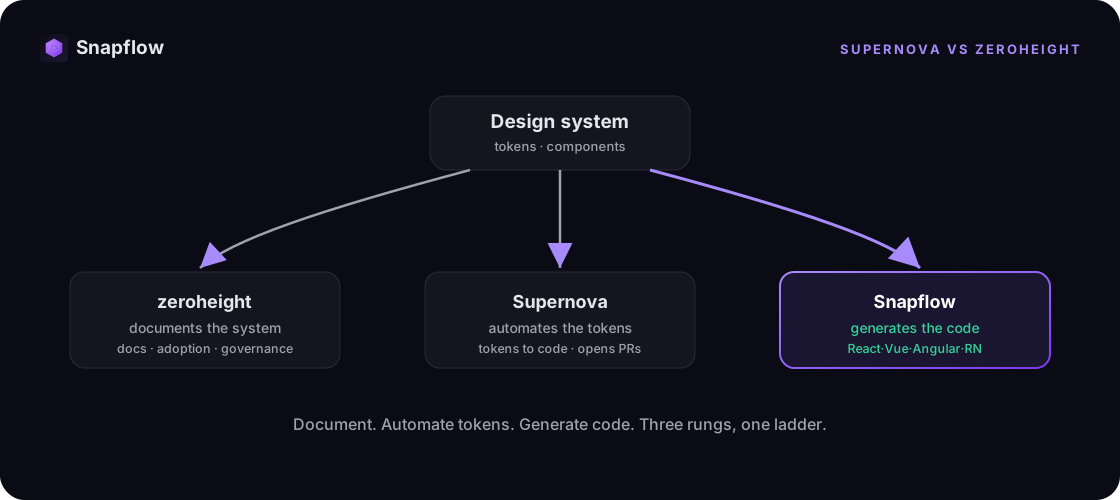
Both tools stop at the same line. They document and deliver the pieces of your system, guidelines, snippets, and tokens. As of 2026, Supernova automates tokens into code variables and opens PRs, which is real leverage, but that is token delivery, not generating your full component library on-spec across every framework. Neither platform generates your production components, the actual React, Vue, or Angular code, deterministically from the system.
That last step is design system infrastructure. Snapflow hands it to you already built: an agentic design system with tokens, components, and governance rules in React, Vue, and Angular, from which your agent writes the code with the /snapflow skill and the MCP. The three are rungs on one ladder: document with zeroheight, automate tokens with Supernova, and generate the components with infrastructure. If you are weighing a documentation platform more broadly, we mapped the field in zeroheight alternatives.
FAQ
Is Supernova or zeroheight better?
Neither is universally better. zeroheight wins for design-led documentation, fast setup, and adoption. Supernova wins when the goal is automating the Figma-to-codebase token pipeline. Choose by the job you actually need done, not by feature count.
Is zeroheight or Supernova easier to set up?
zeroheight. It connects to Figma and produces polished docs in hours. Supernova is more powerful on automation, but setup realistically takes days because you are wiring a token pipeline into your repositories.
Is Supernova free?
Supernova offers a free entry point and paid plans that scale up. zeroheight also has a paid Starter tier above its free usage. Check each vendor for current pricing, since plans change.
Do Supernova or zeroheight generate production code?
They deliver the pieces. zeroheight documents and embeds snippets, Supernova automates tokens into code and opens PRs. Neither generates your full component library on-spec across every framework from the system. That deterministic generation is what design system infrastructure adds.
See it on your own system
The fastest way to know which layer you actually need is on your own design system. Snapflow is waitlist-only for now, and we open seats in batches, in order. Join the waitlist or see pricing.